
The April 6 election highlights backlash against Black Lives Matter and radical policy ideas.
Photo by Steven Spoerl.
On April 6, Madison’s Common Council elections could usher in a group of movement-backed alders, pushing the city government to the left. Jael Currie, Brandi Grayson, Tessa Echeverria, Nikki Conklin, Yannette Figueroa Cole, Benji Ramirez Gomez, and both candidates for Madison’s District 8—Juliana Bennett and Ayomi Obuseh—have campaigned to prioritize the provision of social services in the municipal budget. Ramirez Gomez, Bennett, Obuseh, Echeverria, and Grayson, have explicitly campaigned to finance those public services by cutting the city’s growing police budget.
This election is a test of the power of movement politicians to mobilize voters at the polls. At the same time, it’s also a demonstration of the potency of backlash against the movement to end police brutality. The more radical candidates in the race are fighting an uphill battle against “tough on crime” politics and paid messaging from development interests.
The insurgent candidates have garnered the support of local organizations on the left such as Freedom Inc., the Community Response Team, Reshaping Madison Together (RMT), and the Madison Area Democratic Socialists of America. (Full disclosure, I am a member of the DSA—but have not been involved with their electoral work.)
If they win, the Common Council may become more responsive to the demands of those and other activist groups. Their candidacies have also drawn a reaction from conservatives, business interests, and the police: In the past six months, donors have sponsored a rash of billboards and political leaflets scaremongering about crime in Madison, while the Madison Professional Police Officers Association (MPPOA) weighed in with an endorsement ranking their preferred candidates. (Ald. Paul Skidmore—who drew scrutiny amid allegations that he had called a community member a “cunt” during a Common Council meeting—topped the list of candidates endorsed by the union.)
The election comes amid a municipal fight over housing reform. The most recent Common Council meeting, a seven-hour affair on March 30, turned out a small crowd of Madison residents to speak on a proposal to construct a new men’s homeless shelter near East Towne Mall and amendments to the city’s zoning code. Currie, who is running against Matt Tramel in the District 16 race, articulated her position in favor of the new shelter alongside other housing advocates in attendance. The Council ultimately voted to delay a decision to its May meeting, yet again prolonging a years-long struggle to establish more shelter space.
“I’m obviously in support of this, because the need for a permanent men’s shelter is long overdue and absolutely necessary,” Currie said during the meeting, describing the church basements that currently serve as men’s shelters as “never designed to fit humans.” She also argued for expanded budgeting for the operations of the shelter, including boosting wages for staff.
The session underscored the stigma that unhoused Madison residents face, with East Side business and property owners complaining that the shelter would drive down property values in the area. State Representative Samba Baldeh, who wrapped up his term as District 17 alder last week, told constituents in an email that he would “kill” the proposal to build a shelter—and during the session, he quickly raised procedural objections around the introduction of the proposal, calling Mayor Satya Rhodes-Conway “dictatorial.”
Isthmus reported last week that real estate developers have poured money into the elections, most notably in the form of $30,000 for campaign flyers paid for by the National Association of Realtors Fund. The fund specifically boosted the campaigns of Alds. Sheri Carter, Paul Skidmore, and Syed Abbas, three incumbents who will face off against Grayson, Conklin, and Echeverria, respectively. Charles Myadze, who is challenging Ald. Rebecca Kemble of District 18, has also received a campaign boost from the industry group.
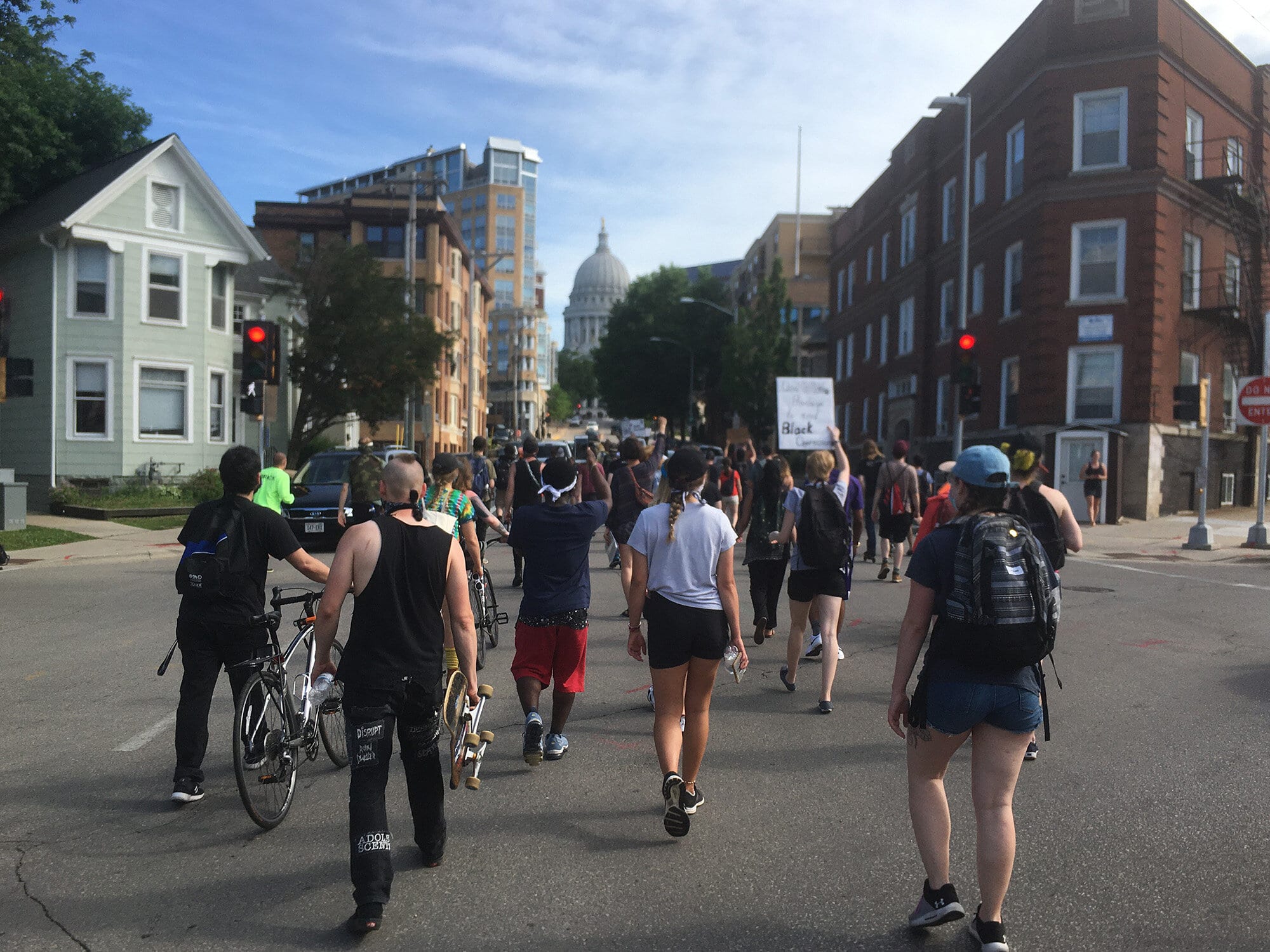
In addition to the real estate money, conservative donors have used the elections to mobilize white backlash to the Black Lives Matter uprisings of May and June 2020. Take for instance Eric Hovde, a hedge fund manager and former Republican Senate candidate, who paid for a series of billboards claiming that crime had risen dramatically in Madison. “Shootings up 78%,” read one series of billboards, alleging that Alders including Kemble and District 13’s Tag Evers had pushed to defund the Madison Police Department. (The billboard likely drew from police reports of an increase in shell casings recovered—when compared with data on actual shootings, the claim doesn’t hold up.) Another opaquely funded billboard campaign, from a group calling itself Community for Responsible Government, plays on similar fears about defunding police, with messaging that “thanks” various incumbent Alders for “trying to keep our city safe.”
The elections are a reminder of how the city’s nominally liberal government has unfailingly reproduced the racial inequalities reflected across the state, while steadily expanding the municipal budget for law enforcement—a criticism that the Common Council challengers have levied in their campaigns. Ramirez, Echeverria, Bennett, Obuseh, and Grayson have proposed to socialize services like transit, housing, and even utilities like the internet. Of course in Wisconsin, Scott Walker-era “preemption” laws prohibit cities from adopting such reforms as a raised minimum wage and rent control. If the insurgent candidates win, they will have to legislate creatively to establish the kinds of changes they’ve promised to deliver.