
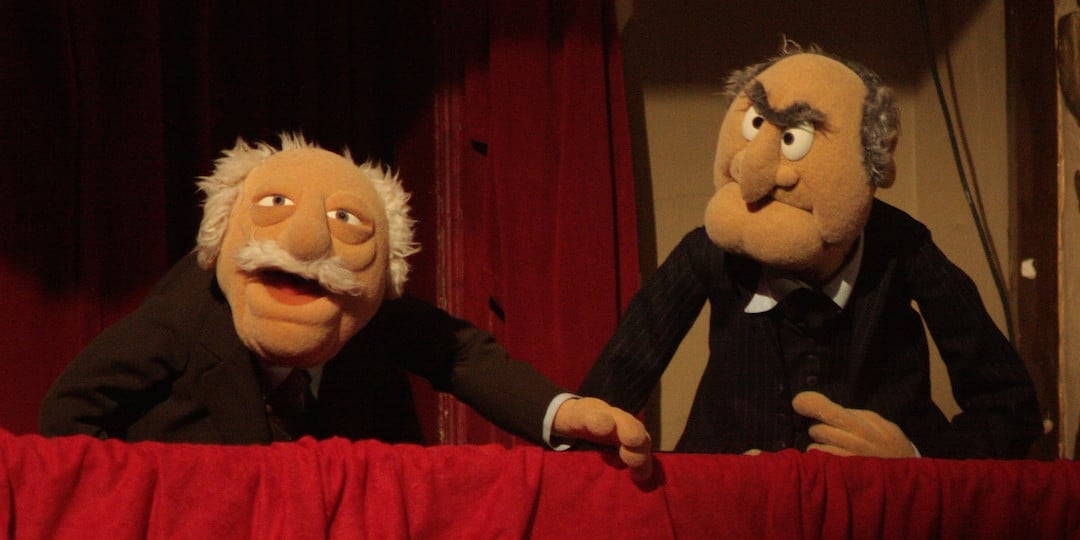
Two Madison-based music writers debate the role of criticism in local music coverage.

When it comes to Madison-based musicians (and really touring bands as well), local media coverage is overwhelmingly positive. That’s true here at Tone Madison, and in The Capital Times, Isthmus, and just about every other media source in town—the music coverage that Madison publications produce for Madison audiences rarely offers a harsh word or even raises the distant possibility that a piece of music sucks. Should it be this way? Andrew Winistorfer, who writes about music for Vice and other national outlets (and contributed to Isthmus and the defunct A.V. Club Madison in the past), recently challenged Tone Madison editor Scott Gordon to debate whether it’d be a good thing for journalists to be a little tougher on local bands.
Andrew Winistorfer: Scott, I come here today after us having an argument over text, and us agreeing that we should make this public, and it’s a subject that is near and dear to my heart: Negative reviews of local bands. Namely that I think we need vastly more of them—being that we have virtually none, currently—and that they can serve a real, important function in the local arts community. If we continue to operate on the assumption that all local music—and I mean all, from jam bands to the overly-precious singer-songwriters given stupid long leashes for their manufactured whimsy in articles in the Isthmus—is “worthy of your time” or “good,” then truly no local music is good or worthy of your time.
Back in the halcyon days of 2010, I tried to be the change I wanted to see in the world. I wrote some freelance reviews for the A.V. Club Madison (R.I.P.) of local bands, and I even reviewed some of them negatively. I gave a pop-punk band’s CD a C-minus, and gave a largely instrumental group’s EP a B-minus, among other more positive reviews.
The reactions to these reviews showed the thin skin and kid gloves-expectations bands have in Madison. The lead singer of the pop-punk band wrote my editor (shouts to Ben Munson) a long thing about how he was “surprised” and “disappointed” by the review. I wonder how he would have felt if I had been allowed to give him the D I felt he deserved. The instrumental band wrote comments on the review itself claiming that I missed the allegedly deep philosophical underpinnings of their—to them at least—perfect music.
I responded to that by mostly refusing to write local CD reviews anymore, because at a point, it became clear that all the bands really wanted was a “This came out and it’s AMAZING” article in print they could show their friends, and not someone to actually engage and critique the music they sent directly to members of the press in emails marked “For review:”. To me, it removed the point of even having a local music press at all; if the ultimate goal is just to get positive notices locally, just set up a Facebook group. Why bother local media?
If Madison ever wants a music scene that is taken seriously, that doesn’t see its best bands needing to leave to get real press and real notice (shouts to Peaking Lights and Zola Jesus), we need a music press that is going to call the bullshit bullshit. Only small groups of Madison listeners paid attention to those bands when they lived here, because the writeups of them locally were virtually identical to writeups of some of the worst music locally.
If no one is willing to call garbage like “Teach Me How to Bucky” out for the trash it is, we’re left with truly embarrassing articles like this.
Scott Gordon: Andrew, I’ve had many people over the years, including some musicians, suggest that more negative criticism of local artists would be a good tough-medicine thing for Madison. My one hangup about this is that authoritative critical pronouncements don’t really interest me in this context. I think it’s much more valuable to contribute an interesting perspective than to try and be a definitive authority, and I don’t think today’s media audience is really looking for the latter. I mean, I obviously bring my opinions and tastes into what I do, but I think there are more constructive and interesting ways to express those than through straight-up album reviews or concert reviews (we never run either on Tone Madison, though our show previews sometimes function a bit as album reviews).
When I do say something negative or critical about a local artist, I want that to be serving a larger point than just “Scott didn’t care for this piece of music.” My writing is only as good as the time and attention I put into listening to and talking with the artists I cover. So I try to show my work in that sense. And honestly, I don’t admire many music critics, and the ones I do are people like the late Robert Palmer, people who give you a strong opinion but also always leave you with a ton of knowledge and insight.
The other thing is, I’ve rarely felt motivated to pan or skewer a local band. When I hear a local band that makes horrible music, I pretty much never think, “Oh, what they need is to be taken down a peg!” And there is terrible local music in Madison, but it mostly isn’t hurting anyone except a few poor souls who choose to listen to it. If someone makes terrible music and has a big platform and is really arrogant about it, that might change. I’m actually much more likely to be critical when I think a good or at least potentially good band is falling short of its promise.
In fact, many times I’ve ended up being glad that I didn’t write something nasty about an artist, because that artist ended up improving, or I ended up later overcoming a preconception that had kept me from appreciating their music. And sometimes an artist is just young or new, and frankly I think anyone with the guts to do any creative work in public is entitled to have some iffy results without getting mauled in the press. Most of us doing something creative make a lot of bleh stuff before and between the good stuff. Sometimes people complain to me that I only end up covering bands I like. That’s a fair criticism and it’s pretty much true, but in my defense, the bands I like are a pretty diverse lot and it’s all I can do just to keep up with them. In fact, the abundance of good Madison-based artists is the only reason I still do anything with music writing.
However, I do agree with you that there’s a bigger problem in all this. The way that Madison artists are covered in local media now, there’s an implied message that either everything is great, or that everything is good on about the same level. That really does a disservice to everyone by casting all artists in about the same lukewarm, vaguely defined middle, and by leaving readers with just more fluffy copy that’s tough to tell apart from a press release and often reflects little engagement with the music itself on the part of the writer.
This paints a picture that no one can really believe. Music inherently, inescapably plays on our emotions and tastes, and it’s a vast world of which everyone will experience a different cross-section, and when you set those factors aside you’re being untrue to what music is. That subjectivity will shake out differently for each individual, and music writers absolutely need to bring knowledge and attentive listening and well-supported arguments to the table, but to demand “objective” music criticism has always struck me as absurd and disingenuous. It’s one of many scenarios in journalism where too much “objectivity” or “balance” leaves you with bloodless writing that actually is passively steered by the opinions and agendas of others.
So I’d argue that what we need isn’t necessarily more negative reviews, but a broader array of perspectives, a greater willingness to not run with the pack, and the courage to write more things that aren’t glorified marketing copy. Don’t you think there’s a challenge here, one that demands not that we fall back on old-fashioned album reviews but instead find new ways to share our perspectives, tastes, and priorities?
Andrew Winistorfer: I’m of two minds on this, so hear me out.
On one hand, I personally feel like the album review is “over” as a vital, important thing. If you read a review of something in like, Rolling Stone, it takes literally 10 seconds for you to be listening to that music. The point of a review—I’ve always felt—has been to tell people why something was or wasn’t worth listening to, delivered by someone with unfettered access to new music. But now, people are only prevented by the speed of their internet connection from hearing literally any music ever. No 22-year-old dingus needs to read what a 26-year-old dingus–who is hoping to “breakthrough” via his reviews on Tiny Mixtapes–thinks about the new Tame Impala record.
But, as a proud Madison resident who likes to support local art and who has a day job and a dog and a girlfriend (humblebrag), I don’t make it out to 1/25 of the things I’d be vaguely interested in attending. This is where an authoritative voice actually would serve an important function; I can’t tell, reading most music calendars in Madison (Tone Madison’s mostly excluded, but only because I can trust you, Joel, Ben and Chris since you’re my friends) what is actually worth my time. The way most local press operates is on the assumption that everything is worth my time, when that is 1000% not true. The decision of whether I should go see that goofy metal band every local media outlet has an interview with this week at The Frequency, or catch up on my Netflix queue, listen to non-local music while relaxing on my couch, or just watch HGTV till I go to bed is a real one I have to make every night of the week living here. And because I can’t make heads or tails of 92 percent of what music locally is actually worth my time—for real—I end up watching Property Brothers for five hours every night.
I guess what I’m actually advocating for is a true alternative music press in Madison. Because of shrinking staffs at the big papers, and the Isthmus’ overly conciliatory and middle-aged leaning arts coverage—despite its new owners seeming like they were investing in making the arts coverage as vital and fresh as the politics coverage—we’re left with identical music sections in every outlet every week. Some of that is because Madison is a small city, but why should I believe four identical writeups of the alt-country band that is having a record release at Crystal Corner? I can’t decide on my own beforehand if the band is any good—because I can’t hear their album on Spotify—and I can’t trust the local press, because all of them are telling me the same thing.
Maybe the band in that scenario is that good, but when are we going to get an outlet that will tell you the pretentious theremin band is horseshit? When are we going to get a site that will tell you not to believe the writeup of the rap group in The Cap Times, and that you should just listen to Migos at home in your pajamas instead? There is a lot of great music being made in Madison—shouts to the circle of groups to come out of First Wave on campus, you guys are the best—but pretending that all of it should be paid equal attention by everyone is ignoring the reality of modern life.
I say this not because I hope you break me off a $20 for this or buy me a beer the next time we’re at a show together [Editor’s note: No], but Tone Madison is the closest thing we have to this. You call BS when you see it, and I know that when you guys are truly excited about a local band, I should be too. But like you said, you’re one man, and you can’t cover everything because you have a life outside of this, and why should you waste your precious spare time on something you hate.
I guess ultimately this might boil down to that a negative review here might effect like 20 people who aren’t aware that some people might hate the local ska band they love. But a positive review would just piss off cranks like me who get duped into turning up for a show for a band I find insidious. Would you ever consider running takedowns of local groups outside of an album review context?
Scott Gordon: Sure, if a situation warranted it. It’s hard to say what that would be without dreaming up silly hypotheticals, but if something in a band’s behavior or output was really odious, and talking about it would serve some worthy idea or purpose, then yes. I just don’t go out looking for those opportunities because there is so much other work to be done, so much worthwhile local music that that local outlets serving local audiences either neglect to cover, or cover in a rather perfunctory way.
The biggest offender in the “perfunctory” department is The Cap Times’ recent “fall in love with a local band” Q&A series—it’s a gimmick that uses the same set of questions every week, and even in the intro copy for the interviews, there’s little reflection of real engagement with the artist or their music, but instead descriptions that simply quote from the artist’s bio or other press outlets. A lot of the artists featured in the series are absolutely worthwhile, yet you don’t come away from these Q&As with any sense of why they stand out.
As someone who spends a lot of time listening to Madison artists’ music and fussing over interview questions for my pieces about them, I find the whole thing insulting. Local publications covering local artists for local audiences have a unique opportunity to do better than this—yes, even in a time of strained resources. It’s also really dissonant, because on other arts fronts The Cap Times has a couple of the most dedicated, engaged folks you could ask for, Lindsay Christians (theater, fine art, food, drinks) and Rob Thomas (movies and a little bit of music). And what I like most about those two is the balance they strike—they know they’re writing for a general audience, but can reconcile that with depth and substance, with a result that’s neither insultingly basic nor haughtily esoteric.
Anyway, I suppose both The Cap Times and Isthmus deserve some credit for keeping an eye on local music, even if it’s not one of the more important things in the mix for them (which is understandable, to a point, for general-interest publications serving a broad local audience). I agree that on this front Madison essentially lacks an alternative media, or at least one with much of a compelling voice or point of view or a spine. In a lot of cities, there’s a dynamic of the alt-weekly or what have you serving as a smart-assed, aggressive foil to, and often openly razzing, the stodgier established media outlets; in Madison, the two have fairly similar liberal-but-mild-mannered personas. Really, our main alternative media institution right now is WORT-FM, and that’s nothing to sniff at. But the question of whether or not Madison really has a robust alternative media is a whole other tangent.
Besides, we shouldn’t be striving just for an alternative media, but a diverse array of perspectives—a media and community discourse that treats local music like it’s important, acknowledging its diversity and, yes, its capacity to be everything from wretched to excellent. I don’t think we get there by simply publishing some harsh local CD reviews. But our conversation reminds me that it’s important for us media folks to always question the way we approach our work, and challenge ourselves to find better ways to serve our communities.